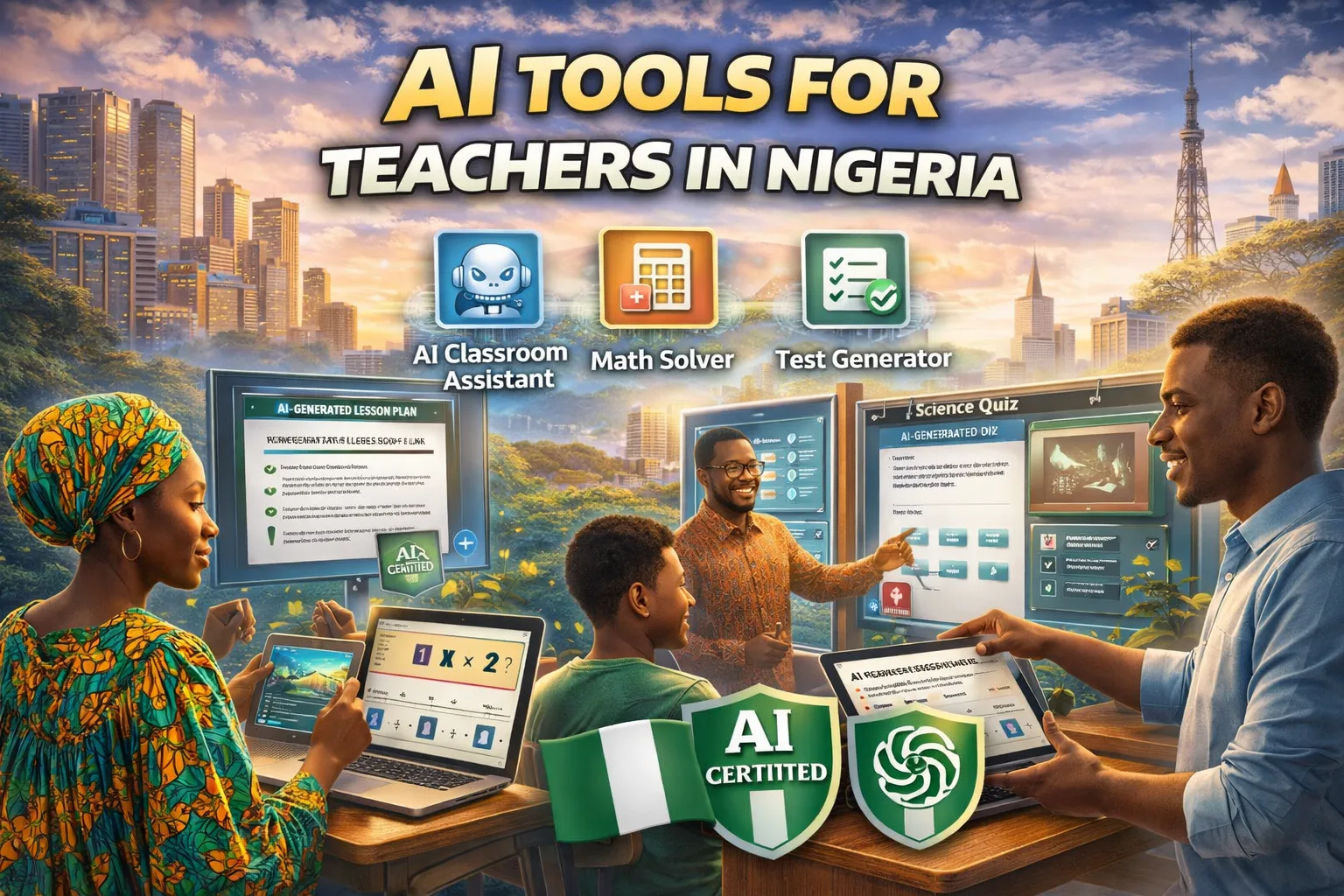
Revolutionizing the Classroom: AI Tools for Teachers in Nigeria
The hum of innovation is growing louder, and its echoes are reaching the farthest corners of Nigeria’s vibrant educational landscape. Artificial Intelligence (AI), once a concept primarily confined to research labs and sci-fi movies, is rapidly transforming industries, and education is no exception. For teachers in Nigeria, a nation grappling with diverse learning needs, resource constraints, and a burgeoning young population, AI offers not just a glimpse into the future, but a tangible set of tools that can revolutionize how they teach, engage students, and manage their classrooms.
This article delves into the world of AI tools specifically designed to empower Nigerian teachers. We’ll explore how these technologies can address key challenges, enhance pedagogical practices, personalize learning experiences, and ultimately contribute to a more effective and equitable education system. From automating mundane administrative tasks to providing sophisticated feedback mechanisms and unlocking new avenues for creative instruction, AI is poised to become an indispensable ally for educators across the Federal Republic.
The Nigerian Educational Landscape: Challenges and Opportunities for AI
Before we dive into the specific AI tools, it’s crucial to understand the context of the Nigerian educational system. Nigeria faces a unique set of challenges:
- Large Class Sizes: Many classrooms, particularly in public schools, are significantly overcrowded, making individualized attention a Herculean task for teachers. The UNESCO Institute for Statistics (UIS) has reported on the global issue of overcrowded classrooms, a reality keenly felt in Nigeria.
- Resource Limitations: Access to up-to-date textbooks, learning materials, and technological infrastructure can be sporadic. This disparity creates an uneven playing field for many students and educators.
- Diverse Learning Needs: Nigerian classrooms are a melting pot of diverse learning styles, abilities, and backgrounds. Catering to each student’s individual pace and needs is a continuous challenge.
- Teacher Workload: Beyond instruction, teachers often bear a heavy burden of administrative duties, lesson planning, assessment marking, and parent communication.
- Demand for 21st-Century Skills: The global economy is rapidly evolving, demanding that students develop critical thinking, problem-solving, creativity, and digital literacy skills.
Despite these challenges, Nigeria possesses immense potential. A young, digitally-inclined population, combined with a growing interest in technological adoption, creates fertile ground for AI to flourish in education. The Nigerian government has also expressed its commitment to leveraging technology for educational advancement, as highlighted by initiatives aimed at improving digital infrastructure.
AI in Action: Revolutionizing Teaching and Learning in Nigerian Classrooms
AI is not about replacing teachers; it’s about augmenting their capabilities, freeing them from repetitive tasks, and equipping them with powerful insights to better serve their students. Here’s how AI tools are poised to make a significant impact:
1. Personalized Learning and Adaptive Systems
One of the most transformative aspects of AI in education is its ability to personalize the learning experience. Every student learns at their own pace and in their own way. AI-powered adaptive learning platforms can tailor content, difficulty levels, and learning pathways to individual student needs.
- How it works: These systems analyze student performance in real-time, identifying areas of strength and weakness. Based on this data, they can dynamically adjust the learning material, providing remedial exercises for struggling students or offering more challenging content for advanced learners.
- Benefits for Nigerian Teachers:
- Differentiated Instruction: Easily cater to the diverse learning needs within large classes without the overwhelming manual effort.
- Targeted Intervention: Quickly identify students who need extra support and provide them with personalized interventions.
- Student Engagement: Keep students motivated by providing them with content that is appropriately challenging and relevant to their progress.
- Data-Driven Insights: Gain a deeper understanding of individual student progress and identify systemic learning gaps.
- Credible Source: The Bill & Melinda Gates Foundation has been a significant supporter of research and development in personalized learning technologies, recognizing their potential to close achievement gaps.
2. Intelligent Tutoring Systems (ITS)
Intelligent Tutoring Systems are AI-powered platforms that act as virtual tutors, providing students with step-by-step guidance and immediate feedback on their learning.
- How it works: ITS can break down complex problems into manageable steps, offer hints when a student is stuck, and explain concepts in different ways until the student grasps them. They can also simulate dialogues and provide answers to student queries.
- Benefits for Nigerian Teachers:
- On-Demand Support: Students can receive immediate help when they encounter difficulties, even outside of regular class hours.
- Reinforcement of Concepts: Provides continuous practice and reinforcement of learned material, crucial for solidifying understanding.
- Reduced Teacher Burden: Frees up teachers from answering repetitive questions, allowing them to focus on more complex pedagogical tasks.
- Accessibility: Can be particularly beneficial in remote areas where access to human tutors might be limited.
- Credible Source: The Carnegie Learning approach, for instance, emphasizes the use of AI-powered adaptive learning and intelligent tutoring to improve student outcomes.
3. Automated Grading and Feedback
The sheer volume of assessments in a typical Nigerian classroom can lead to a significant portion of a teacher’s time being consumed by grading. AI can automate many of these processes, providing faster and more consistent feedback.
- How it works: AI can grade multiple-choice quizzes, short-answer questions, and even essays (to a certain extent) by analyzing patterns, keywords, and sentence structures. It can also provide automated feedback on common errors, grammar, and style.
- Benefits for Nigerian Teachers:
- Time Savings: Significantly reduce the time spent on grading, allowing teachers to allocate more time to lesson planning and student interaction.
- Faster Feedback Loops: Students receive feedback more quickly, enabling them to learn from their mistakes while the material is still fresh in their minds.
- Consistent Evaluation: Reduces subjective bias in grading, ensuring a more consistent and fair evaluation process.
- Identification of Common Errors: AI can highlight recurring mistakes across the class, informing teachers about areas that require further instruction.
- Credible Source: Organizations like Turnitin utilize AI and plagiarism detection software to assist educators and promote academic integrity, demonstrating the practical application of AI in assessment.
4. AI-Powered Content Creation and Curation
Generating engaging and relevant learning materials can be time-consuming. AI tools can assist teachers in creating and curating a wide range of educational content.
- How it works: AI can generate practice questions, summaries of texts, quizzes, flashcards, and even explainer videos based on provided topics or materials. It can also help curate relevant online resources, articles, and videos tailored to specific learning objectives.
- Benefits for Nigerian Teachers:
- Rich and Diverse Resources: Easily create supplementary materials that cater to different learning styles and interests.
- Time Efficiency: Streamline the process of developing engaging lesson materials.
- Up-to-Date Content: Quickly find and integrate current information and real-world examples into lessons.
- Accessibility of Information: Bridge the gap in access to diverse textbooks by leveraging AI to generate supplementary content.
- Credible Source: Platforms like OpenAI’s ChatGPT and Google’s Bard are demonstrating AI’s capability in generating various forms of text-based content, which can be adapted for educational purposes.
5. AI for Administrative Tasks and Workflow Automation
Beyond direct classroom instruction, teachers are often bogged down by administrative tasks. AI can help streamline these processes, freeing up valuable time.
- How it works: AI can assist with scheduling parent-teacher meetings, managing attendance records, generating reports, responding to basic parent queries via chatbots, and even assisting with lesson plan organization.
- Benefits for Nigerian Teachers:
- Reduced Administrative Burden: Focus more on teaching and less on paperwork.
- Improved Communication: AI-powered communication tools can help bridge the gap with parents, especially in areas with limited communication infrastructure.
- Efficient Record Keeping: Automate the collection and organization of student data for better tracking and reporting.
- Better Time Management: Optimize the teacher’s schedule by automating recurring tasks.
- Credible Source: Educational technology companies are increasingly offering integrated AI solutions for school administration, demonstrating the trend towards automation in educational management.
6. AI for Enhanced Assessment and Analytics
AI can provide deeper insights into student learning patterns and trends, moving beyond simple grades to understanding how students learn.
- How it works: AI can analyze various data points, including student interactions with digital tools, their responses to questions, and their engagement levels, to identify learning difficulties and predict potential academic challenges.
- Benefits for Nigerian Teachers:
- Early Intervention: Proactively identify students at risk of falling behind and offer timely support.
- Data-Driven Decision Making: Make informed pedagogical decisions based on comprehensive student data.
- Understanding Learning Gaps: Identify specific areas where the curriculum or teaching methods might be falling short for the broader student population.
- Personalized Recommendations: AI can suggest specific resources or activities that would benefit individual students based on their learning patterns.
- Credible Source: Educational analytics platforms are increasingly leveraging AI to provide schools and teachers with actionable insights into student performance and engagement.
7. AI for Accessibility and Inclusivity
AI has the potential to address the unique needs of students with disabilities, making education more accessible and inclusive in Nigeria.
- How it works: AI can power tools like speech-to-text and text-to-speech converters, real-time translation, and personalized learning interfaces that adapt to the specific requirements of students with visual, auditory, or learning impairments.
- Benefits for Nigerian Teachers:
- Support for Diverse Learners: Provide tailored support for students with special educational needs.
- Breaking Down Language Barriers: Facilitate communication and learning for students from diverse linguistic backgrounds.
- Enhanced Engagement for Students with Disabilities: Offer a more accessible and engaging learning experience for all students.
- Promoting Equity: Foster a more inclusive learning environment where every student has the opportunity to succeed.
- Credible Source: Organizations like the World Intellectual Property Organization (WIPO) highlight the role of AI in promoting accessibility for persons with disabilities, which has direct implications for education.
Implementing AI in Nigerian Classrooms: Practical Considerations and the Way Forward
While the potential of AI in Nigerian education is immense, its successful implementation requires careful planning and consideration of several factors:
1. Infrastructure and Connectivity
The most significant hurdle for widespread AI adoption is the availability of reliable internet connectivity and adequate digital devices. Initiatives to expand broadband access across Nigeria are crucial. Investing in school-level digital infrastructure is also paramount.
2. Teacher Training and Professional Development
Teachers are the cornerstone of any educational system. Equipping them with the skills and knowledge to effectively utilize AI tools is non-negotiable. Comprehensive training programs that focus on practical application, ethical considerations, and pedagogical integration of AI are essential. The Nigerian Educational Research and Development Council (NERDC) and other educational bodies should prioritize such training.
3. Cost and Affordability
The cost of AI-powered tools and platforms can be a barrier. Exploring open-source AI solutions, government subsidies, and partnerships with technology companies can help make these tools more accessible to Nigerian schools and teachers.
4. Ethical Considerations and Data Privacy
As AI systems collect and process student data, robust data privacy and security measures are critical. Transparency in how data is used and ensuring ethical AI deployment are paramount to building trust and protecting students. Compliance with Nigerian data protection laws is essential.
5. Culturally Relevant AI Tools
It is important to develop or adapt AI tools that are culturally relevant and sensitive to the Nigerian context. This includes incorporating local languages, cultural references, and addressing specific local educational challenges.
6. Collaboration and Knowledge Sharing
Fostering a culture of collaboration among teachers, educational institutions, policymakers, and technology developers is crucial for sharing best practices, identifying solutions, and driving innovation. Online communities and forums for Nigerian educators to discuss AI tools can be valuable.
The Promise of AI for the Future of Nigerian Education
AI is not a magic bullet, but it represents a powerful set of tools that can significantly enhance the work of Nigerian teachers and improve learning outcomes for millions of students. By embracing AI, Nigeria can:
- Bridge the educational gap: Provide quality education to students in underserved and remote areas.
- Foster 21st-century skills: Equip students with the critical thinking, problem-solving, and digital literacy skills needed for the future.
- Empower teachers: Reduce workload, enhance pedagogical practices, and provide them with valuable insights.
- Create a more equitable system: Ensure that every student, regardless of their background or location, has access to effective and engaging learning experiences.
The journey of integrating AI into Nigerian classrooms is underway. With strategic planning, investment in infrastructure and training, and a collaborative spirit, AI can truly revolutionize education in Nigeria, unlocking the full potential of its bright young minds and shaping a more prosperous future for the nation. The time to embrace this technological frontier is now.